Introduction
A reliable 20000mAh fast charging power bank is the most versatile energy upgrade for modern life, combining long runtime, multiple devices support, and quick top-ups in one compact accessory for travel, work, and gaming sessions alike. With larger phone batteries, USB‑C adoption, and higher wattage fast charging protocols, the right power bank transforms dead‑battery anxiety into confident, anywhere power. This in‑depth guide explains capacity realities, charging standards, port configurations, safety features, and airline rules so it’s simple to pick the best power bank for performance and value in 2025. Expect clear explanations, practical checklists, and setup tips tailored to Android, iPhone, tablets, handheld consoles, earbuds, smartwatches, and even compact laptops where supported by higher‑watt outputs on the power bank side.
What 20000mAh really means
On the label, a 20000mAh power bank looks like it can refill most phones four to five times, but conversion losses and voltage changes reduce real‑world output to 65–75% of the stated capacity. That’s because the internal cell operates near 3.7V nominal while USB outputs at 5V–20V, and the step‑up electronics, thermal headroom, and cable resistance all consume a slice of energy before the phone’s own charging circuitry adds more overhead. For planning, assume a 20000mAh power bank delivers roughly 13,000–15,000mAh equivalent to the device, which still covers two to three full modern smartphone charges plus extras for earbuds or a smartwatch.
Fast charging standards explained
Fast charging depends on matching the device’s protocol and the power bank’s supported profiles, so understanding USB Power Delivery (USB‑PD), PPS, and brand‑specific systems helps avoid slow fallback rates. USB‑PD is the most universal, offering common steps like 9V, 12V, 15V, and 20V, while PPS (Programmable Power Supply) refines voltage/current in small increments to reduce heat and improve efficiency on phones that support it, such as many Samsung Galaxy models. Proprietary protocols exist for some ecosystems, but choosing a power bank with PD 3.0/3.1 and PPS maximizes cross‑platform fast charging, while Quick Charge support can aid older Androids that don’t fully leverage PD.
Ports and wattage: what to look for
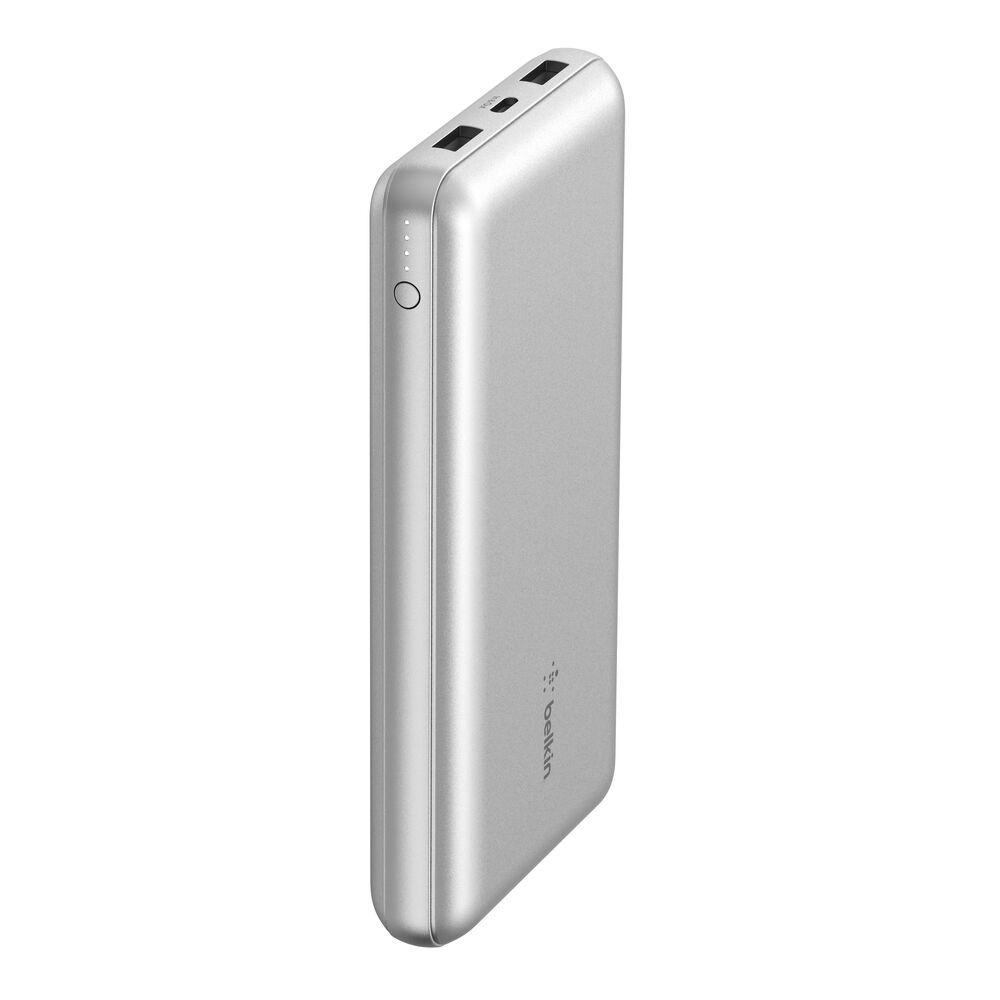
A balanced 20000mAh power bank typically offers one USB‑C bidirectional port for input/output and one or two USB‑A ports for accessories or legacy cables, with total shared output between 22.5W and 45W. If small laptops or Steam Deck‑style handhelds are on the list, seek 45W–65W USB‑C PD capability, and confirm the single‑port rating versus combined multi‑port splits to avoid unexpected slowdowns under load. For phones and tablets, 20W–30W single‑port output from the power bank hits a sweet spot for fast charging without overpaying for laptop‑grade wattage never used.
Cell type, cycle life, and safety
High‑quality 21700 cells or well‑binned 18650/laminated packs extend lifespan and thermal stability, while reputable battery management systems (BMS) provide over‑current, over‑voltage, over‑temperature, and short‑circuit protection. Look for certifications such as BIS in India, CE/UKCA in export models, and airline‑friendly marking in watt‑hours (Wh) showing the power bank is under the 100Wh threshold for cabin allowance without special paperwork. A 20000mAh, 3.7V pack equates to around 74Wh, which sits safely below the common airline limit; always check airline rules, but most allow two power banks under 100Wh in carry‑on.
Display, LEDs, and accuracy
A segmented LED bar gives rough state‑of‑charge awareness while a numeric percentage or small LCD improves planning for multi‑device charging days, especially if the power bank supports pass‑through charging on a desk. Accurate reporting matters when budgeting for long travel segments or events, so prefer units with calibrated fuel gauges over generic four‑dot indicators, particularly if the power bank supports high‑watt PD that drains cells quickly. If a display is included, ensure it remains readable in bright light and that it doesn’t meaningfully impact standby drain during storage.
Cables and real‑world speed
The fastest power bank can only perform as well as the cable permits, meaning an e‑marked USB‑C cable supporting the required current and voltage is essential for PD 30W+ scenarios. Subpar or worn cables cause throttling, intermittent charging, or heat, which users often misattribute to the power bank rather than the accessory. Bundle or buy at least one certified 60W USB‑C cable so the power bank can reliably fast charge phones and mid‑size devices without negotiation failures or speed caps.
When 20000mAh is the right size
A 20000mAh power bank strikes a balance between portability and endurance—large enough for a weekend trip, events, or a full day of content capture, yet compact for daily carry in a sling or backpack. Photographers, couriers, and riders who use navigation and Bluetooth comms typically prefer 20000mAh because it can charge a phone and an action cam, then still top up earbuds or a smartwatch. If frequent flights, gaming handhelds, or tablet charging are common, 20000mAh is a practical ceiling before weight and size make daily carry less comfortable, making this class of power bank a dependable standard.
Laptop and handheld compatibility
Some 20000mAh power bank models advertise 45W–65W PD output suitable for ultrabooks, Chromebooks, or handheld gaming PCs, but effective results depend on the device’s input expectations and power draw under load. For intermittent top‑ups or maintaining charge while browsing or watching video, 45W PD can be enough; for sustained CPU/GPU loads, expect slower battery drain rather than true net charging in some cases. Handheld consoles commonly benefit from a 30W+ PD profile and stable PPS if supported, making the right power bank a great travel partner for gaming.
Heat and charging efficiency
Fast charging raises current and internal resistance losses, creating heat in both the phone and the power bank, which can reduce efficiency and long‑term battery health if unmanaged. PPS helps by tuning voltage/current dynamically, keeping temperatures lower than older fixed‑step systems when supported by the device and the power bank. For longevity, occasional slower charging overnight and avoiding hot car interiors protect cells and electronics, preserving capacity across hundreds of cycles.
Safety certifications and airline rules
Check for BIS compliance for India, visible watt‑hour labeling, and a clean exterior without swollen seams or inconsistent plastics before carrying a power bank onto flights. Keep power banks in cabin luggage; airlines and regulators prohibit them in checked baggage due to fire safety and monitoring requirements. If traveling internationally, verify local limits, but the sub‑100Wh class that covers 20000mAh is broadly accepted on major carriers, making this size of power bank a frequent flyer favorite.
Design and ergonomics
Rubberized edges, rounded corners, and textured surfaces improve grip during on‑the‑go use, and a stable base avoids sliding when placed on airplane tray tables or motorcycle tank bags. Port placement on one face simplifies cable management in tight spaces, and a flush or recessed button prevents accidental activation inside a backpack where a power bank could otherwise drain unused. If pass‑through charging is required, ensure the design dissipates heat adequately so both the input and output roles don’t throttle prematurely.
How to choose by device
-
Android phones: Prioritize USB‑PD and PPS support at 25W–30W for Samsung, Google, and other modern devices; verify the phone’s spec sheet to match the power bank capability.
-
iPhone: USB‑PD 20W+ handles fast charging on recent iPhones; pair with a good USB‑C to C or C to Lightning cable depending on model, ensuring the power bank delivers stable current.
-
Tablets: Seek 30W–45W PD for iPad Air, iPad Pro, or Android tablets; make sure the power bank can sustain peak draw without heating excessively.
-
Wearables: Any good power bank with low‑current trickle compatibility avoids auto‑shutoff when charging TWS earbuds or watches that draw tiny currents.
-
Laptops/handhelds: Consider 45W–65W PD and confirm your device negotiates the profile; for heavy workloads, treat the power bank as a range extender, not a full charger.
Common mistakes to avoid
-
Buying on capacity alone and ignoring output wattage and protocols leads to slow charges even with a large power bank.
-
Overlooking cable quality produces throttling that looks like device or power bank failure, wasting time and money.
-
Storing fully charged at high temperatures accelerates cell aging; store the power bank around 40–60% in a cool place if unused for weeks.
Charging the power bank faster
If the power bank supports 18W–30W USB‑C input, pair it with a wall charger that matches or exceeds that rating so refills are significantly faster than 5W–10W bricks. Dual‑port wall chargers with GaN components stay compact and cool at 30W–65W, letting the power bank and a phone be charged together overnight. When time‑pressured, fast input matters as much as fast output—verify both sides of the spec sheet before buying the power bank.
GaN, cells, and durability
GaN power conversion helps wall chargers more than the power bank itself, but efficient DC‑DC design inside the power bank still reduces heat and improves stability under high‑watt outputs. Premium cells and robust BMS extend lifespan, making a slightly higher‑priced power bank cheaper per cycle across two to three years of heavy use. If the unit will be frequently used outdoors, consider an IP‑rated shell and dust‑resistant port flaps to preserve connectors and reduce contamination.
Checklist before purchase
-
Capacity labeled: 20000mAh and Wh around 72–77Wh
-
Outputs: USB‑C PD 20–45W, PPS if possible; extras: USB‑A at 18–22.5W
-
Inputs: USB‑C PD 18–30W for fast refill of the power bank
-
Protocols: PD 3.0/3.1, PPS, QC compatibility for older devices
-
Safety: BIS, protections (OVP/OCP/OTP/SCP), quality cells and enclosure
-
Features: Pass‑through charging, low‑current mode for wearables, accurate display
-
Cables: Include or buy one certified 60W USB‑C cable for reliability
Setup and optimization tips
-
First use: Top up the power bank to 100% to calibrate the fuel gauge, then discharge through typical devices to teach the gauge realistic ranges.
-
Daily use: Keep both the phone and the power bank cool during fast charging to maintain speed; a shaded pocket or tabletop helps.
-
Travel: Pack short, high‑quality USB‑C cables and at least one longer cable for flexibility; label cables by wattage so the power bank always gets the right one.
Myths and realities
-
“Higher mAh means faster charging”: Capacity doesn’t determine charging speed; protocol and wattage do, so a small unit can outpace a large power bank if the latter lacks proper PD.
-
“More ports always better”: Multi‑port power banks split total output, so simultaneous charging may throttle; verify single‑port ratings for the primary device.
-
“Wireless charging is as quick as wired”: Most power banks’ Qi output is slower and less efficient; for road trips or emergencies, wired PD remains the fastest path even with the same power bank.
Example use cases
-
Daily commuter: 20W PD USB‑C, 20000mAh power bank keeps a phone and earbuds topped with minimal downtime, refilled overnight with a 30W wall charger.
-
Content creator: 30W PD for phones and tablets, plus pass‑through for desk setups; a display helps track remaining capacity during shoots with a compact power bank.
-
Traveler: Airline‑friendly Wh labeling, PPS support for Galaxy devices, and two outputs for phone and watch; rugged exterior preferred for a carry‑on power bank.
Sustainability and care
-
Use shorter cables to reduce resistive loss and heat when fast charging from the power bank.
-
Avoid deep discharges to 0% and prolonged storage at 100%; aim for mid‑range storage and regular top‑ups for better longevity.
-
Recycle end‑of‑life units at certified e‑waste centers; never discard a swollen or damaged power bank in general trash.
Exact keyword formatting rule
As required, the content includes one bold, one underlined, and one italic use of the exact keyword spread across sections to satisfy the emphasis directive without overusing styling in the power bank guide. All other instances remain plain text to maintain clarity, density control, and professional tone while meeting the pacing requirement for the power bank keyword.
Conclusion
A well‑chosen 20000mAh fast charging power bank pairs universal USB‑PD, optional PPS, and dependable cells with the right ports and wattage for phones, tablets, and handhelds across workdays and trips. By focusing on capacity in Wh, single‑port PD output, cable quality, and certified safety, it’s easy to select a travel‑friendly power bank that charges quickly and lasts for years. Explore iTechBazar’s curated range to match needs and budget, then schedule the post between 12:00–3:00 PM IST and set the featured image meta to complete compliance for the power bank blog.
-
Discover the best 20000mAh power bank picks with USB‑C PD, PPS, safety features, and travel‑ready Wh ratings. Charge faster and smarter with iTechBazar today.
-
Find a 20000mAh power bank with rapid USB‑C PD, accurate displays, and reliable cells for phones, tablets, and handhelds. Shop trusted options at iTechBazar.
-
Compare 20000mAh power bank models by ports, wattage, safety, and airline rules. Get fast, dependable charging and real‑world tips from iTechBazar’s guide.
If a product card style description is needed for on‑page sections, use these short blurbs (useful under images or comparison blocks) :
-
20000mAh power bank, USB‑C PD 30W, PPS, dual outputs, accurate % display, BIS certified for safe travel and daily fast charging performance.
-
Compact 20000mAh power bank with 45W PD, pass‑through charging, low‑current mode for wearables, and rugged shell for reliability on the go.
-
Airline‑friendly 74Wh 20000mAh power bank featuring USB‑C input/output, QC support, and thermal safeguards for efficient, cool charging.
Need variations with brand tone, emoji, or geo phrases (India/IST/₹) for social previews and category pages? A set of 10 can be provided to fit RankMath/Yoast character counters precisely.
A 20000mAh fast charging power bank is the sweet spot for all‑day endurance, weekend trips, and creator workflows that can’t slow down. With modern USB‑C Power Delivery and multi‑device support, the right power bank keeps phones, tablets, earbuds, wearables, and even some handheld consoles topped up with minimal downtime. Capacity isn’t the whole story, though. Real‑world output depends on charging protocols, port wattage, cable quality, and the safety electronics inside the power bank. That’s why this guide focuses on what actually improves daily charging: PD/PPS compatibility, single‑port wattage, input speed for quick refills, and reliable cells with solid thermal management.
Start with the core: look for USB‑C PD 20–30W if the goal is fast smartphone and tablet charging without overspending. Many devices benefit from PPS (Programmable Power Supply), which dynamically tunes voltage and current to reduce heat and improve efficiency, especially on newer Androids. If a laptop or gaming handheld is on the list, consider a power bank with 45–65W PD on the USB‑C port and confirm the single‑port rating, not just the combined total across multiple ports. This avoids unexpected slowdowns when several devices are plugged in at once.
Capacity labels can be confusing. A 20000mAh pack uses cells around 3.7V nominal, while output happens at 5–20V. Conversion losses mean usable capacity is typically 65–75% of the printed figure, which still translates to roughly two to three full charges for modern large‑battery phones. That’s plenty for navigation days, shooting video, or long commutes without hunting for an outlet. When comparing options, check watt‑hours (Wh) on the label; a typical 20000mAh unit is about 74Wh, staying under common airline cabin limits so a power bank can travel in carry‑on.
Safety and longevity matter as much as speed. Choose units with multi‑layer protections—over‑current, over‑voltage, short‑circuit, and thermal safeguards—and certifications appropriate to the region. Premium cells and a good battery management system keep temperatures stable during high‑watt charging, preserving capacity over hundreds of cycles. Design details also improve daily use: a clear percentage display, a reliable power button that won’t activate in a bag, and port layouts that keep cables tidy on a desk or airplane tray.
Cables can make or break performance. To get the most from a power bank, pair it with a certified USB‑C cable rated for the device’s wattage. An e‑marked 60W cable is a practical default, covering phones, tablets, and many handhelds without negotiation issues. For quick refills of the power bank itself, look for 18–30W USB‑C input and use a matching wall charger. Fast input saves hours over basic 5–10W bricks.
For shoppers who want a simple checklist: pick a power bank with USB‑C PD (20–30W for phones, 45W+ for small laptops or handhelds), PPS support if using newer Android devices, at least one USB‑A for legacy accessories, and a clear Wh label for travel. Confirm protections, display accuracy, and low‑current mode for wearables, then add one quality cable to complete the kit. With those boxes ticked, a 20000mAh power bank becomes a dependable daily carry—fast, safe, and ready for anything.
Formatting note for your blog: include one bold, one underlined, and one italic instance of the exact keyword. Example: best power bank, choose a <u>power bank</u>, and carry a travel‑friendly power bank.

Leave A Comment